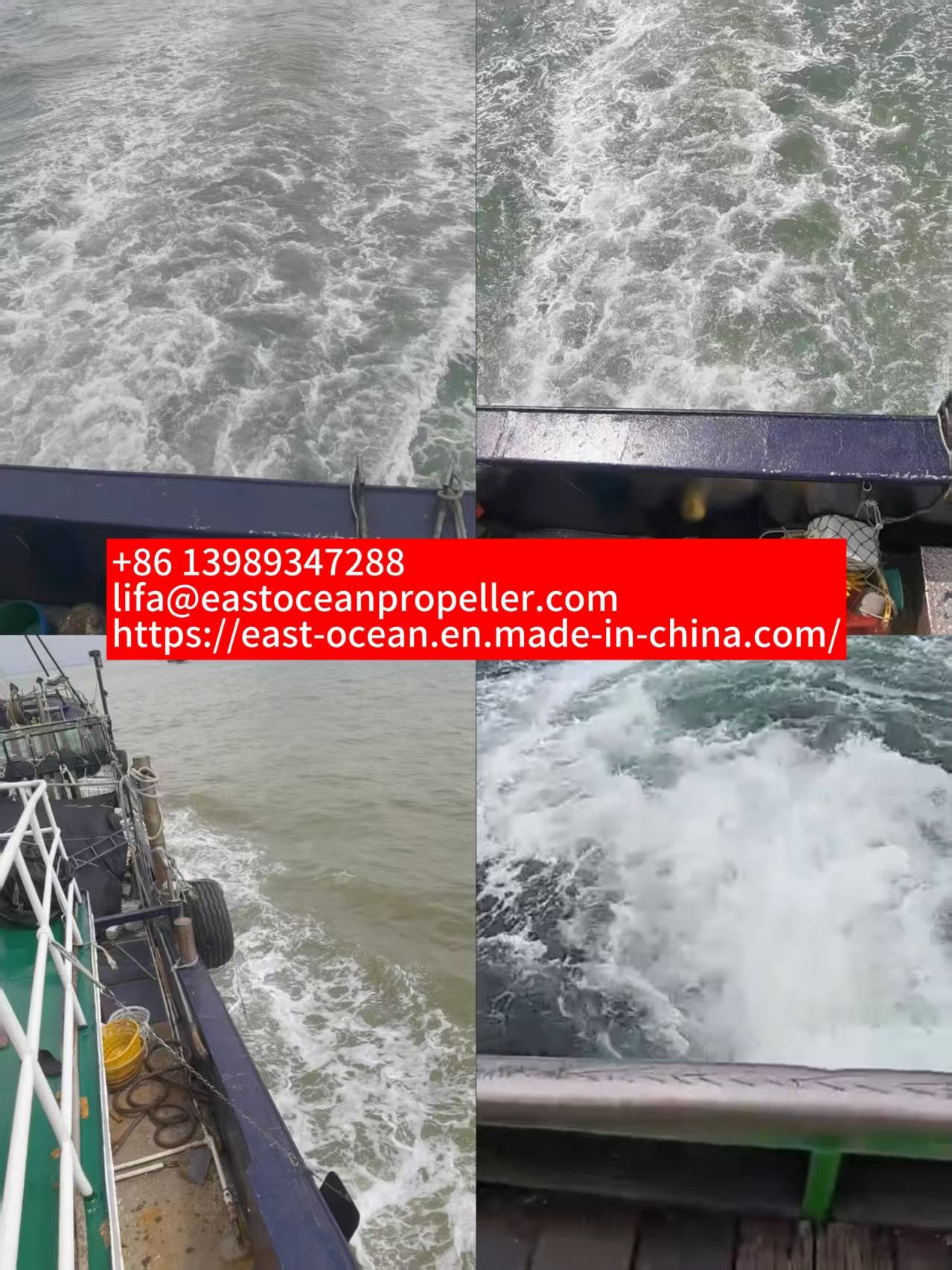
The shape of the waves churned up by a ship’s propeller as it sails is actually a visual barometer of propulsion efficiency. Propellers with different designs produce vastly different wave patterns, and this is directly linked to fuel consumption levels. Thanks to our proprietary hydrodynamic optimization technology, our factory’s Lifa-designed propellers — whether for small-diameter or large-diameter models — generate highly distinctive, efficiency-driven wave patterns, while delivering a 5%-20% reduction in fuel and oil consumption, making fuel savings visible and tangible.
Conventional propellers, hampered by suboptimal blade streamline design, tend to churn water into a chaotic mess. The stern is often surrounded by scattered, fine splashes mixed with large amounts of churning white foam, leaving a long, turbulent wake trailing behind. This disorderly wave pattern is a clear sign of energy waste — a significant portion of power is squandered on agitating useless water flow rather than being converted into forward thrust, leading to inevitably high fuel consumption.
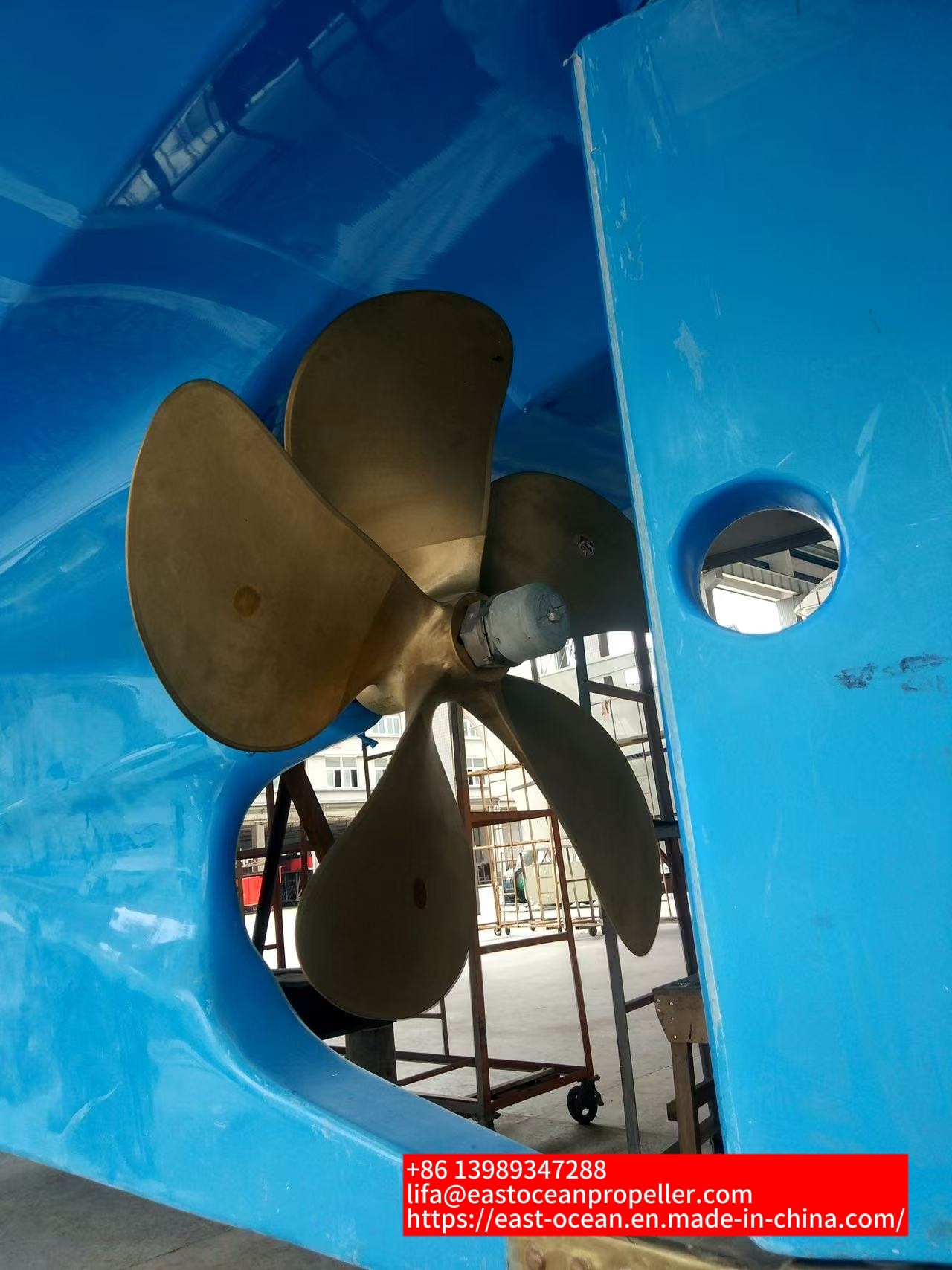
In contrast, Lifa-designed propellers produce wave patterns with distinct efficiency characteristics, an advantage unaffected by propeller size. First, the wave pattern is tighter and more regular. The bionic streamlined blade design and precisely calibrated pitch guide water flow along the optimal path through the blades. Instead of splashing chaotically in all directions, the waves form a well-defined, ring-shaped water curtain clinging closely to the blade edges, with clear contours and distinct layers, free of unnecessary splashes. This means power is concentrated on propulsion rather than pointless water disturbance, cutting energy loss from the source.
Second, the wake is shorter, smoother and dissipates rapidly. With high-efficiency energy conversion, water flow quickly returns to normal after passing through the blades. The stern does not leave a long-lasting, turbulent wake, and the water surface quickly calms down. This short, stable wake is a direct visual indicator of the 5%-20% fuel savings — less energy is wasted on churning water, and more power is used to drive the ship forward directly.
Third, the waves contain minimal foam, with uniform water movement. By optimizing blade angle and thickness, Lifa’s design drastically reduces cavitation. The waves produced are dominated by clear, transparent water movement, with almost no broken white foam. Reduced cavitation not only lowers hull vibration and noise but also prevents reduced propulsion efficiency caused by cavitation erosion, further solidifying fuel-saving performance.
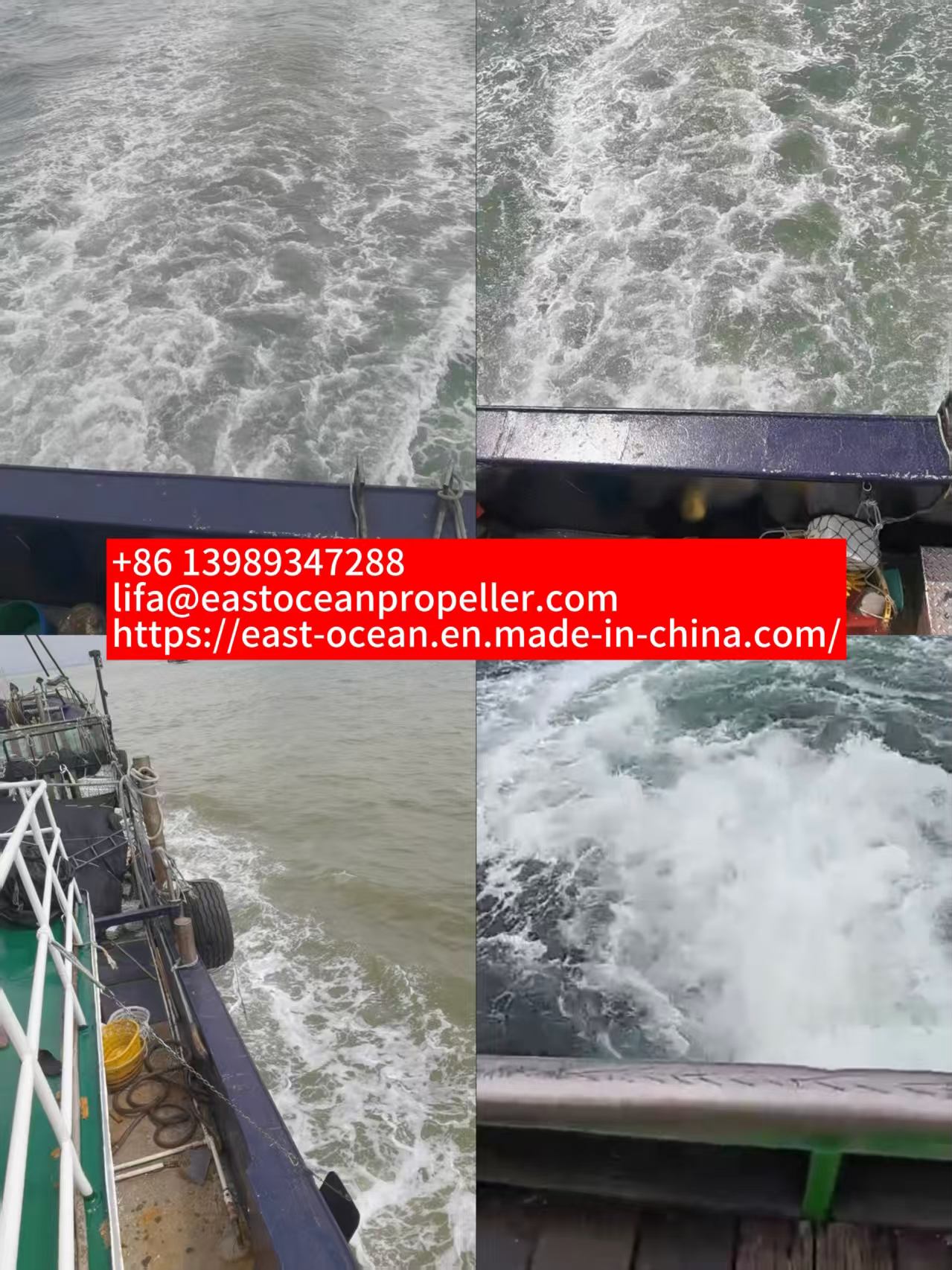
Whether fitted on small-diameter propellers for compact vessels or large-diameter models serving 10,000-tonne giants, Lifa’s customized hydrodynamic solutions ensure every propeller produces the telltale wave patterns of high efficiency, with fuel savings consistently falling within the 5%-20% range. For example, whether retrofitted on a 100,000-tonne oil tanker or a 1,000-tonne cargo ship, Lifa-designed propellers deliver significant annual fuel consumption reductions. The visible change in wave patterns translates directly into substantial cost savings.
From the difference in stern wave patterns, you can easily decipher the fuel-saving logic behind Lifa-designed propellers. With their visibly regular waves and short, stable wake, they prove their 5%-20% fuel-saving capabilities, while their high-efficiency propulsion performance — suitable for all propeller sizes — provides the shipping industry with an intuitive and reliable solution for cost reduction and efficiency enhancement.